
You are here
Feed aggregator
« Une France 100 % Fibre en 2025 », cette promesse des gouvernements Macron qui n’a pas été tenue
La France est la championne d’Europe du très haut débit. Mais la promesse de la fibre optique pour tous était irréalisable. La couverture du réseau pourrait même s’avérer moindre que celle du cuivre qui commence à être démantelé.
Categories: France
Meteorológiai figyelmeztetés a reggeli köd miatt
A Szlovák Hidrometeorológiai Intézet (SHMÚ) elsőfokú meteorológiai figyelmeztetést adott ki csütörtökön (12. 18.) 10:00 óráig az ország nyugati és középső részére a köd előfordulásának a veszélye miatt (50-200 m-es látótávolság). Óvatosan közlekedjenek az útnak indulók!
Categories: Határon túli magyar portálok összesített hírei
Ab in die Karaffe mit dem Wein: Das musst du beim Dekantieren beachten
Umgiessen von Wein in eine Karaffe wird «Dekantieren» genannt. Aber wann tut das Dekantieren einem Wein gut und wann lässt du besser die Finger davon?
Categories: Swiss News
Alltagslast bei Diabetes: 5 Strategien gegen das Stressmonster
Wort & Bild Verlagsgruppe - Gesundheitsmeldungen: Baierbrunn (ots) - Der ständige Druck ist für Menschen mit Diabetes besonders ungesund. Der "Diabetes Ratgeber" zeigt, wie Sie sich wieder entspannen können. Es schleicht sich oft heimlich an. Erst klitzeklein, wächst es bei dauerhafter ...
Zelk Zoltán: Elkésett vers
Kórházi ágyamhoz lihegve
(félek, mégis elkésve már)
szalad a hír: Nagy László-számot
készít-szerkeszt a Tiszatáj.
Hát így igen, így az igazság,
mert őneki ez már dukál,
s milyen jó nékem, az öregnek,
hogy tudja ezt a Tiszatáj.
Hogy tudja: elindult Iszkázról,
s anyjának szótfogadva jár,
míg szófogadó anyja s apja
nem lesz a Duna- s Tisza-táj.
Ismertem őt fickó korában,
mikor haja még volt sötét,
mikor rútságos köznapokban
írta vasárnap gyönyörét.
S láttam csikót faragni fából,
csak játszva, mert játszani jó,
és jött a perc és égre szállt a
táltossá varázsolt csikó.
És jött az év, mely nyári arcát
téli hajjal földíszíté,
és lett az ő szép téli-nyári
arca is a költészeté.
Ady ostoros unokája,
József Attila hű fia,
ki dühét mellkasába gyűrte,
ha volt is miért sírnia.
Barátja sok! És ellensége?
ha van, az se csodálkozik:
mert oly nagy kópé! ha akarja,
holnap bátyánkká változik!
Forrás: PIM
Nyitókép: Fortepan/Kádas Tibor
The post Zelk Zoltán: Elkésett vers appeared first on Kárpátalja.ma.
Categories: Határon túli magyar portálok összesített hírei
Newcastle United to face Manchester City in EFL Cup semi-finals
Holders Newcastle United will face eight-time winners Manchester City in the semi-finals of the Carabao Cup. Chelsea will either meet Arsenal or Crystal Palace in the other two-legged last-four tie but must wait until Tuesday 23 December to find out which of their London rivals it will be.
Categories: Africa
Schienbein-Tor gegen Florida: Kurioser Fiala-Treffer reicht den Kings nicht
Kevin Fiala erzielt ein kurioses Tor für die Los Angeles Kings – der Puck prallt von seinem Schienbein ab und landet im Netz. Dennoch reicht es nicht für einen Punktgewinn gegen die Florida Panthers.
Categories: Swiss News
Emotionale Klima-Debatte: «Sagen Sie doch nicht, wir hätten nur Ausreden!»
Im dritten Stock brannte es kurz im Bundeshaus. Politiker mussten draussen warten, bis die Feuerwehr grünes Licht gab. In der Wintersession behandelt das Parlament das Budget für 2026 und wählt das Bundespräsidium.
Categories: Swiss News
Ghana’s Canoeing Team wins bronze on historic Africa Youth Games debut
Ghana rsquo;s emerging canoeing programme announced its arrival on the continental stage with a historic bronze-medal performance at the ongoing Africa Youth Games, Angola 2025. Making their maiden appearance in the history of the Games, the Ghanaian duo of Maxwell Ofoi and Okronipa Ohene Emmanuel powered through the waters with courage, .
Categories: Africa
Nach Rob Reiners Tod: So emotional verabschiedet sich Meg Ryan vom «Harry-und-Sally»-Regisseur
Meg Ryan hat sich nach dem gewaltsamen Tod von Regisseur Rob Reiner zu Wort gemeldet. Auf Instagram veröffentlichte die Schauspielerin einen bewegenden Abschied an den Mann, der sie 1989 mit der romantischen Komödie «Harry und Sally» zum Weltstar machte.
Categories: Swiss News
Remise des spécimens des bulletins uniques aux partis politiques
La Commission Électorale Nationale Autonome (CENA) a procédé, ce mercredi 17 décembre 2025, à la remise des exemplaires des spécimens de bulletins uniques aux partis engagés dans les élections communales et législatives.
La CENA poursuit son calendrier électoral. Elle vient de procéder à la remise des exemplaires des spécimens de bulletins uniques aux partis politiques en lice. La remise des spécimens s'inscrit dans le cadre des obligations de transparence et d'équité électorale prévues par la législation en vigueur.
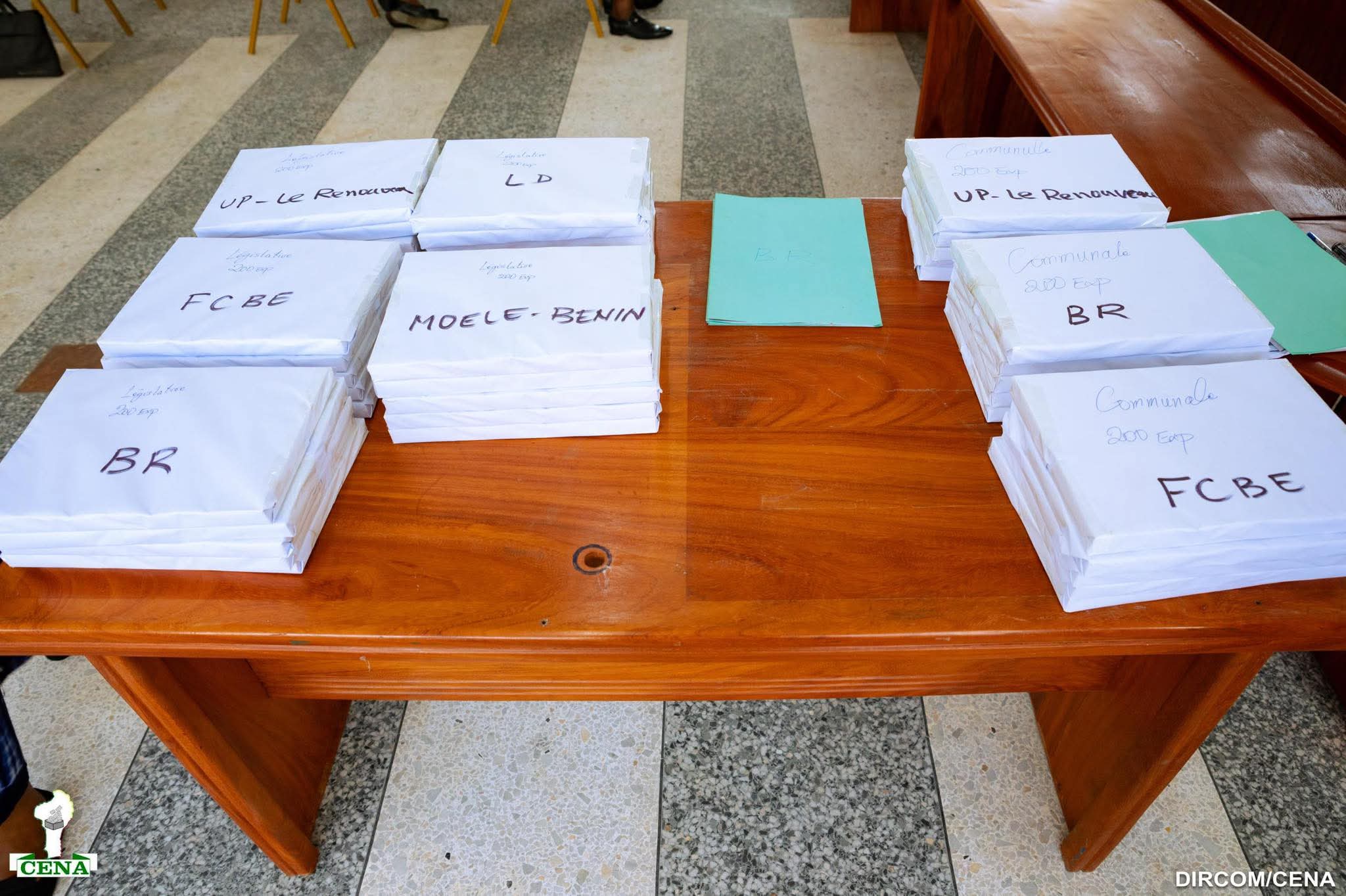
Cinq (5) partis politiques se sont engagés dans la course pour les élections législatives et communales du 11 janvier. Il s'agit des partis FCBE, UP-R, "Les Démocrates" Moele Bénin et BR.
A.A.A
Categories: Afrique
Anklage wegen Aufruf zu Hass: Ex-SVP-Nationalrat Claudio Zanetti steht in Hinwil ZH vor Gericht
Er muss sich am Donnerstag vor dem Bezirksgericht Hinwil im Zürcher Oberland verantworten. Er ist angeklagt, weil er auf der Plattform X einen Beitrag eines israelischen Armeesprechers teilte.
Categories: Swiss News
Les marchés financiers renouvellement leur confiance au Bénin
Le Bénin vient une fois de prouver la résilience de son économie à travers une opération de levée de fonds sur le marché financier de l'UEMOA. Le pays vient de lever la somme de 100 milliards de francs CFA dans un contexte marqué par la mutinerie déjouée.
Les évènements du 7 décembre 2025 n'ont pas émoussé les ardeurs des investisseurs à faire confiance au Bénin. Une opération d'émission d'Obligations assimilables au Trésor (OAT), s'est soldée par un succès franc ce mardi 16 décembre 2025.
Pour un objectif de 100 milliards de francs CFA mis en adjudication, le marché a répondu favorablement avec 117,8 milliards de francs CFA, pour une couverture de 117,8%. Les 100 milliards recherchés ont été intégralement mobilisés confirmant ainsi la vitalité économique du pays.
Une telle souscription de la part des investisseurs témoigne de la résilience de l'économie béninoise malgré les chocs exogènes.
En dépit du contexte de coup d'Etat manqué, le Trésor béninois a pu se permettre de retenir l'intégralité du montant visé tout en rejetant 15,1% des offres. Avec un taux d'absorption de 84,9%, le Bénin prouve sa capacité à lever des fonds dans les conditions les plus maitrisées.
F. A. A.
Categories: Afrique
Les Guépards terminent leur préparation à Ziaida
Dernière ligne droite pour les Guépards du Bénin avant les matchs de la CAN Maroc 2025
Les Guépards du Bénin ont bouclé, dans l'après-midi ce mercredi 17 décembre 2025, leur dernière séance d'entraînement avant le coup d'envoi de la Coupe d'Afrique des Nations (CAN) 2025.
Durant environ deux heures, les poulains de Gernot Rohr se sont entraînés sur le terrain du complexe sportif de Ziaida Benslimane, situé à quelque 25 km de Rabat.
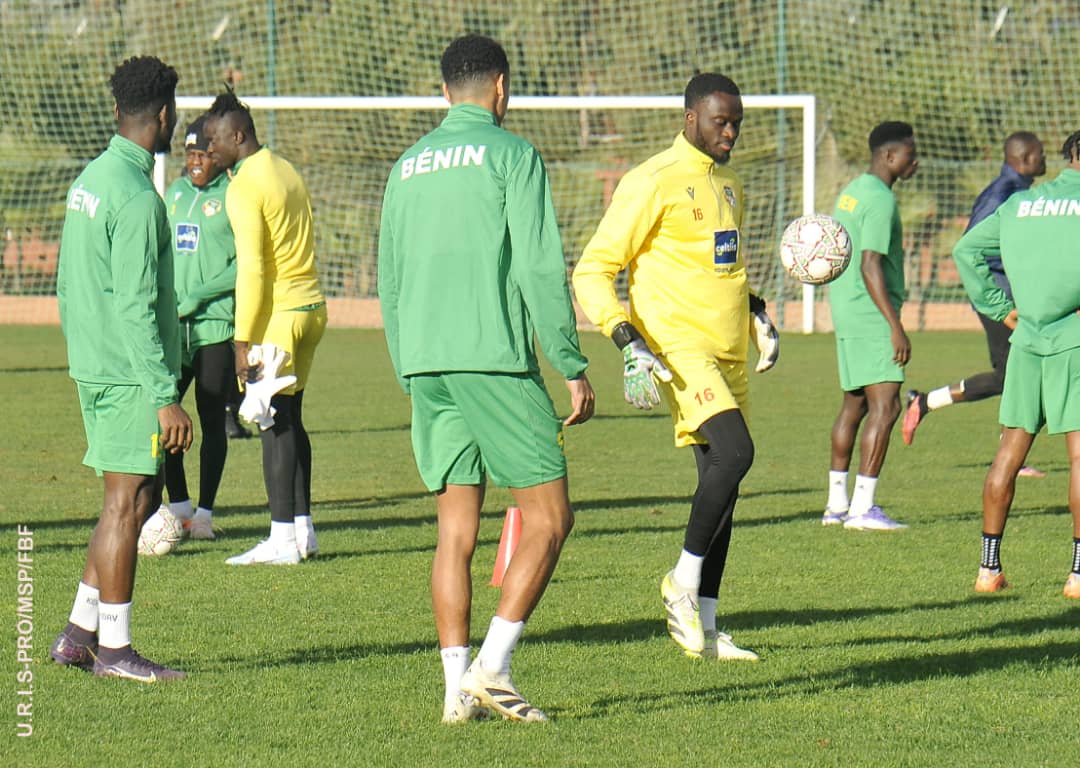
Le jeudi 18 décembre, l'équipe rejoindra la capitale marocaine vers 11h pour participer dans la soirée à la cérémonie officielle de remise du drapeau national à l'ambassade du Bénin.
Le coup d'envoi de la compétition pour les Guépards est fixé au 23 décembre à 15h30 contre la République démocratique du Congo (RDC). Cette équipe, qui a empêché le Nigeria de se qualifier pour la Coupe du monde 2026, sera un premier test décisif pour les Béninois.
M. M.



Categories: Afrique
Narendra Modi en Éthiopie: «La machine industrielle indienne va chercher des marchés en Afrique»
Le Premier ministre de l'Inde Narendra Modi était en visite en Éthiopie cette semaine. C'est au moins le cinquième État africain que visite cette année le dirigeant du pays le plus peuplé du monde. Depuis quelques années, l'Inde, grande puissance asiatique, membre fondatrice des BRICS et rivale de la Chine dans la région, multiplie les accords et partenariats en Afrique dans tous les domaines. Analyse de cette nouvelle dynamique de la diplomatie indienne en Afrique avec Jean-Joseph Boillot, chercheur associé à l'IRIS et spécialiste des relations afro-indiennes. Il répond à Sidy Yansané.
Categories: Afrique
Schweizer Banken mit Millionen gebüsst: Weko deckt Abreden im Finanzhandel auf
Die Weko hat Bussen von insgesamt 237,5 Millionen Franken gegen zwanzig Banken verhängt. Der Grund sind Abreden im Zinsderivate-, Devisen- und Edelmetallhandel.
Categories: Swiss News
My Niece Was Killed Amid Mexico’s Land Conflicts. The World Must Hold Corporations Accountable
Claudia Ignacio Álvarez in San Lorenzo de Azqueltan, Jalisco, Mexico. Credit : Eber Huitzil
By Claudia Ignacio Álvarez
MICHOACÁN, Mexico , Dec 18 2025 (IPS)
My niece Roxana Valentín Cárdenas was 21 years old when she was killed. She was a Purépecha Indigenous woman from San Andrés Tziróndaro, a community on the shores of Lake Pátzcuaro in the Mexican state of Michoacán.
Roxana was killed during a peaceful march organised by another Indigenous community commemorating the recovery of their lands. Forty-six years earlier, three people had been murdered during that same land struggle. This time, the commemoration was once again met with gunfire.
Roxana was not armed and was not participating in the march. She encountered the demonstration and was struck by gunfire. Her death was deeply personal, but it took place within a broader context of long-standing violence linked to land and territory.
That violence has intensified in Michoacán recently, where the assassination of a mayor in November this year underscored how deeply insecurity has penetrated public life and how little protection exists for civilians, community leaders and local authorities alike.
Across Mexico, Indigenous people are being killed for defending land, water and forests. What governments and corporations often describe as “development” is experienced by our communities as dispossession enforced by violence – through land grabbing, water theft and the silencing of those who resist.
A way of life under threat
I come from San Andrés Tziróndaro, a farming, fishing and musical community. For generations, we have cared for the lake and the surrounding forests as collective responsibilities essential to life. That way of life is now under threat.
In Michoacán, extractive pressure takes different forms. In some Indigenous territories, it is mining. In our region, it is agro-industrial production, particularly avocados and berries grown for export. Communal land intended for subsistence is leased for commercial agriculture. Water is extracted from Lake Pátzcuaro through irregularly installed pipes to irrigate agricultural fields, depriving local farmers of access.
Agrochemicals contaminate soil and water, forests are deliberately burned to enable land-use change, and ecosystems are transformed into monocultures that consume vast amounts of water. This is not development. It is extraction.
Violence as a method of enforcement
When Indigenous communities resist these processes, violence follows.
Two cases illustrate this reality and remain unresolved.
José Gabriel Pelayo, a human rights defender and member of our organisation, has been forcibly disappeared for more than a year. Despite an urgent action issued by the United Nations Committee on Enforced Disappearances, progress has been blocked. Authorities have delayed access to the investigation file, and meaningful search efforts have yet to begin. His family continues to wait for answers.
Eustacio Alcalá Díaz, a defender from the Nahua community of San Juan Huitzontla, was murdered after opposing mining operations imposed on his territory without consultation. After his killing, the community was paralysed by fear, and it was no longer possible to continue human rights work safely.
Together, these cases show how violence and impunity are used to suppress community resistance.
Militarisation is not protection
It is against this backdrop of escalating violence and impunity that the Mexican state has once again turned to militarisation. Thousands of soldiers are being deployed to Michoacán, and authorities point to arrests and security operations as indicators of stability.
In practice, militarisation often coincides with areas of high extractive interest. Security forces are deployed in regions targeted for mining, agro-industrial expansion or large infrastructure projects, creating conditions that allow these activities to proceed while community resistance is contained.
Indigenous people experience this not as protection, but as surveillance, intimidation and criminalisation. While companies may claim neutrality, they benefit from these security arrangements and rarely challenge the violence or displacement that accompanies them, raising serious questions about corporate complicity.
A global governance failure
Indigenous territories are opened to extractive industries operating across borders, while accountability remains fragmented. Corporations divide their operations across jurisdictions, making responsibility for environmental harm and human rights abuses difficult to establish.
Voluntary corporate commitments have not prevented violence or environmental degradation. National regulations remain uneven and weakly enforced, particularly in regions affected by corruption and organised crime. This is not only a national failure. It is a failure of global governance.
International responsibility, now
In this context, I have recently spent ten days in the United Kingdom with the support of Peace Brigades International (PBI), meeting with parliamentarians, officials from the Foreign, Commonwealth and Development Office, and civil society organisations.
These discussions are part of a broader international effort to ensure that governments whose companies, financial systems or diplomatic relationships are linked to extractive activities take responsibility for preventing harm and protecting those at risk.
While the UK is only one actor, its policies on corporate accountability and support for human rights defenders have consequences far beyond its borders.
Why binding international rules are necessary
For years, Indigenous peoples and civil society organisations have called for a binding United Nations treaty on business and human rights. The urgency of this demand is reflected in the lives lost defending land and water and in the defenders who remain disappeared.
A binding treaty could require mandatory human rights and environmental due diligence across global supply chains, guarantee access to justice beyond national borders, and recognise the protection of human rights defenders as a legal obligation. It could make Free, Prior and Informed Consent enforceable rather than optional.
Such a treaty would not prevent development. It would ensure that development does not depend on violence, dispossession and impunity.
Defending life for everyone
Indigenous peoples are not obstacles to progress. We are defending ecosystems that sustain life far beyond our territories. Indigenous women are often at the forefront of this defence, even as we face extraordinary risks.
When defenders disappear, when others are murdered, and when young women like my niece lose their lives, it is not only our communities that suffer. The world loses those protecting land, water and biodiversity during a deep ecological crisis.
Defending life and land should not come at the cost of human lives.
Claudia Ignacio Álvarez is an Indigenous Purépecha feminist, lesbian, and environmental human rights defender from San Andrés Tziróndaro, Michoacán. Through the Red Solidaria de Derechos Humanos, she supports Indigenous and rural communities defending their territories from extractive industries and organised crime. Her work has been supported by Peace Brigades International (PBI) since 2023.
IPS UN Bureau
Follow @IPSNewsUNBureau
!function(d,s,id){var js,fjs=d.getElementsByTagName(s)[0],p=/^http:/.test(d.location)?'http':'https';if(!d.getElementById(id)){js=d.createElement(s);js.id=id;js.src=p+'://platform.twitter.com/widgets.js';fjs.parentNode.insertBefore(js,fjs);}}(document, 'script', 'twitter-wjs');
Categories: Africa
Bart De Wever’s date with history
In Thursday's edition: Reparations loan, Montenegro, Mercosur, Meloni, EEAS, VDL to Syria
Categories: European Union
Municipales 2026 : à Paris, les militants PCF et Écologistes votent en faveur de l’union historique avec le PS au premier tour
Le protocole a été validé mercredi soir par les votes des militants communistes et écologistes. Le socialiste Emmanuel Grégoire devrait prendre la tête d’une liste commune entre les trois formations de gauche dès le premier tour des élections de 2026. Une première historique.
Categories: France
Erster Ukraine-Söldner vor Gericht: Schaffhauser Sniper kämpfte gegen die Russen
Der Schaffhauser Scharfschütze Avi Motola kämpfte in der Ukraine gegen die Russen. Jetzt muss er vor Gericht antraben – ob er auftaucht, ist ungewiss.
Categories: Swiss News
Pages


© 2012-2018 Europa Varietas Foundation © 2015-2018 Europa Varietas Association
www.europavarietas.org | info(@)europavarietas(dot)org | Switzerland


We are looking for sponsors for the English translation of these books, please contact turkeandras(at)gmail(dot)com